

Project-Based & EPC

Control scope, cost, procurement, site execution and billing through one project ERP built for complex engineering and construction businesses.

Protect Project Margin Before the Project Is Finished

EPC margins rarely disappear in one visible event. They erode through unpriced scope changes, delayed materials, excess site consumption, idle equipment, subcontractor claims and progress that is completed but not billed. IEV brings the commercial and operational sides of every project together, giving EPC contractors, infrastructure developers and project-based manufacturers a current view of budget, commitments, actual cost, physical progress, billing and forecast outcome. Instead of reconstructing project performance for the monthly review, teams can see where delivery and margin are moving while there is still time to act.

ONE PROJECT. ONE COMMERCIAL TRUTH.

Make Every Site Decision Visible in the Project Numbers

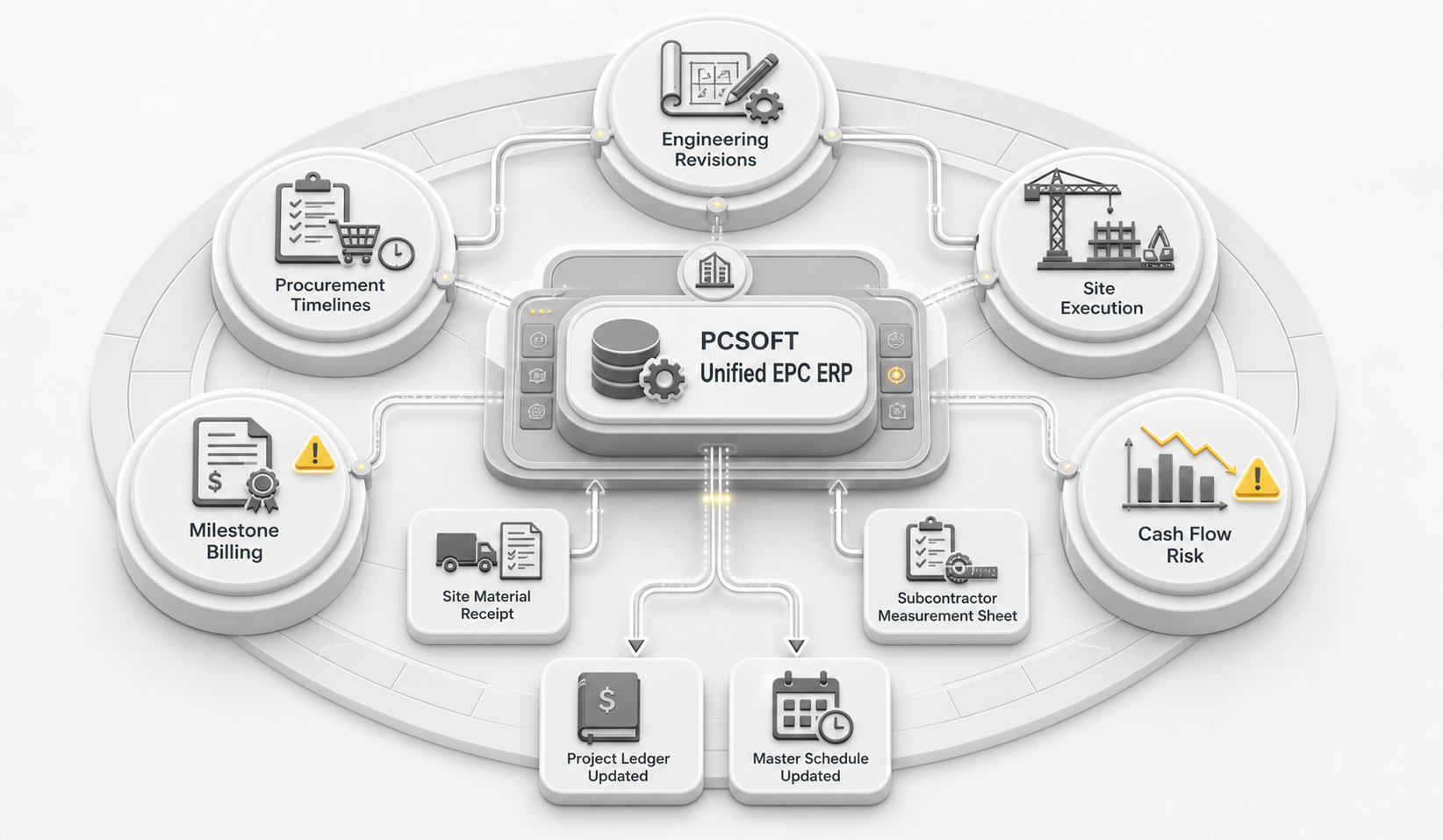
An engineering revision changes quantities. Revised quantities change procurement. Procurement affects the site schedule. Site progress drives subcontractor certification and client billing. Billing determines cash flow. IEV keeps that chain intact by linking project planning, procurement, inventory, site execution, contracts and finance through the same project structure. Every transaction carries its project and WBS identity with it, so the operational event and its commercial impact never become two different versions of the truth.

PROJECT-BASED & EPC WORKFLOWS

See Where the Project Is Heading, Not Just Where It Has Been

Project Estimation, Budget & WBS Control

A project-level budget may show that spending is high, but it cannot explain which activity caused the variance or whether the remaining work can still be completed profitably. Without a disciplined project structure, costs are visible only after they have been rolled into broad totals.

IEV establishes the commercial baseline through a multi-level WBS, activity budgets and cost codes. Revenue, cost, commitments and progress can be reviewed at the project, phase, package or activity level, giving teams enough detail to find the source of a variance and enough context to decide what to do next.

  • Multi-Level Project, Phase, Activity and Work-Package Structure
  • BOQ, Estimate and Approved Budget Baseline Management
  • Material, Labour, Equipment, Service and Overhead Cost Allocation
  • Project and WBS-Wise Commitment, Actual and Balance Visibility
  • Budget Availability Checks Before Purchase or Material Issue
  • Project, Package and Activity-Level Margin Monitoring

Engineering, BOQ & Change Control

A drawing revision can alter quantities, specifications, procurement and execution long before its commercial impact is approved. When engineering changes remain disconnected from project controls, teams may build the revised scope while billing continues against the original contract.

IEV keeps BOQ revisions, budget changes and commercial variations tied to the affected project activities. Teams can preserve the original baseline, track the current approved position and identify work that has changed operationally but has not yet been recognised commercially.

  • BOQ Quantity, Rate and Revision Management
  • Original, Revised and Approved Scope Comparison
  • Change Request, Variation and Approval Tracking
  • Budget and Procurement Impact of Engineering Revisions
  • Additional, Omitted and Substituted Item Control
  • Unapproved Scope and Unbilled Variation Visibility

Project Procurement & Site Material Control

Project procurement must answer more than whether a purchase order was placed. Teams need to know whether the requirement was budgeted, when the material will arrive, which site needs it, whether it passed inspection and how much has actually been consumed.

IEV connects planning, procurement, logistics, receipt, inspection and site inventory to the project requirement that initiated the purchase. Buyers can prioritise critical items, site teams can track usable stock and management can distinguish material purchased for the project from material genuinely available for execution.

  • Project and WBS-Linked Purchase Requisitions and Orders
  • Budget and Quantity Validation Before Procurement
  • Supplier Commitment, Delivery and Pending-Quantity Tracking
  • Gate Entry, Receipt, Inspection and Site-Wise Stock Control
  • Material Issue, Return, Transfer and Consumption by Activity
  • Surplus, Shortage and Excess-Consumption Visibility

Site Progress, Subcontractors & Equipment

Site progress is often reported separately from the resources and contracts behind it. Quantities may be completed but not measured, equipment may remain charged to an inactive activity and subcontractor claims may reach finance without a clear link to verified work.

IEV brings daily progress, subcontractor measurement, resource use and equipment deployment into the project record. The work reported at site becomes the basis for cost, certification, billing and forecast updates, reducing disputes and preventing operational progress from being lost between the field and the back office.

  • Daily and Activity-Wise Physical Progress Recording
  • Quantity Measurement and Joint-Measurement Verification
  • Subcontract Work Order, Rate and Scope Management
  • Running Account Bills, Retention, Deductions and Recoveries
  • Labour, Plant and Equipment Deployment by Project Activity
  • Equipment Utilisation, Idle Time and Project Cost Allocation

Project Cost, Billing & Forecast Control

A project can appear profitable because major commitments have not yet become invoices, completed work has not yet been billed or the cost of remaining activity is based on an outdated estimate. Historical accounting alone cannot show where the project will finish.

IEV combines approved budget, committed cost, actual expenditure, physical progress, earned value and remaining work into one commercial view. Project leaders can track billing, cash exposure, cost and schedule variance, then update the completion forecast using what is happening on the project now.

  • Milestone, BOQ and Progress-Based Client Billing
  • Certified, Billed, Unbilled and Pending Revenue Visibility
  • Budget, Commitment, Actual and Forecast Cost Comparison
  • Cost Variance, Schedule Variance and Earned Value Monitoring
  • Estimate at Completion and Cost-to-Complete Forecasting
  • Project Cash Flow, Receivables and Margin-at-Completion Review

BUILT FOR PROJECT-DRIVEN OPERATIONS

Control the Detail That Determines the Outcome

Work Breakdown Structure (WBS) & Cost Control

Build every project around a strictly controlled Work Breakdown Structure covering phases, activities, work packages, and specific cost codes. Ensure budgets, purchases, material issues, equipment usage, and direct labour remain permanently accountable to the exact part of the project that created them. This structured cost allocation prevents financial leaks and ensures your final project margins remain protected throughout execution.

BOQ Management & Scope Variation Control

Manage precise BOQ quantities, original estimates, approved budgets, and subsequent variations without ever losing sight of the original commercial baseline. Project teams can instantly see what changed, whether the variation has been approved, and exactly how the revision affects final cost forecasts. This strict variation control guarantees that scope changes are properly billed and converted into final sales revenue.

Project-Specific Procurement & Demand Planning

Raise exact material and service requirements directly against the relevant project, physical site, and specific WBS activity. Compare active demand with available stock, open supplier commitments, and expected delivery dates before approving new purchase orders. This stops material shortages from delaying site work and prevents uncontrolled buying from pushing the approved project budget off course.

Subcontractor Certification & Payment Control

Manage subcontract work directly from package award and work order through to physical measurement, certification, retention, and final payment. Site execution and finance teams work from the exact same approved progress data instead of reconciling separate, disconnected records. This eliminates payment disputes, controls unnecessary deductions, and ensures you only pay cash for verified site work.

Physical Progress Tracking & Client Billing

Connect verified physical site progress directly with contractual milestones, scheduled BOQ quantities, and final client billing. Completed work can immediately move into formal certification and invoicing much faster, drastically reducing any missed billable value. Bridging the gap between site execution and invoicing accelerates your project cash flow and secures total revenue collection.

Earned Value & Margin Completion Forecasting

Compare the approved budget, committed costs, actual costs, earned value, and remaining work at every single level of the active project. Management can clearly see the likely completion cost, impending schedule pressure, and exact margin movement in real time. This exposes commercial risks early enough to intervene before the final financial outcome becomes unavoidable, protecting your net profit.

Better Control for Projects That Cannot Afford Surprises